Dive Watch Water Resistance Ratings, Actually Explained (2026)
As an Amazon Associate I earn from qualifying purchases. Prices and availability are accurate as of the date/time indicated and are subject to change.
How we picked: This guide compares options using published
specifications, verified owner-review patterns and reputable expert testing.
We label clearly what is hands-on vs research-based, and never present others'
testing as our own.
Our top picks
| Rank | Product | Name | Why we picked it | Buy |
|---|---|---|---|---|
| Top pick |  | CITIZEN Promaster Dive Eco-Drive, ISO-Certified Rotating Bezel | ISO 6425 dive-watch certified explicitly listed — the actual standard for a 'real' dive watch, not just water-resistance marketing. | Check price |
| Runner-up | 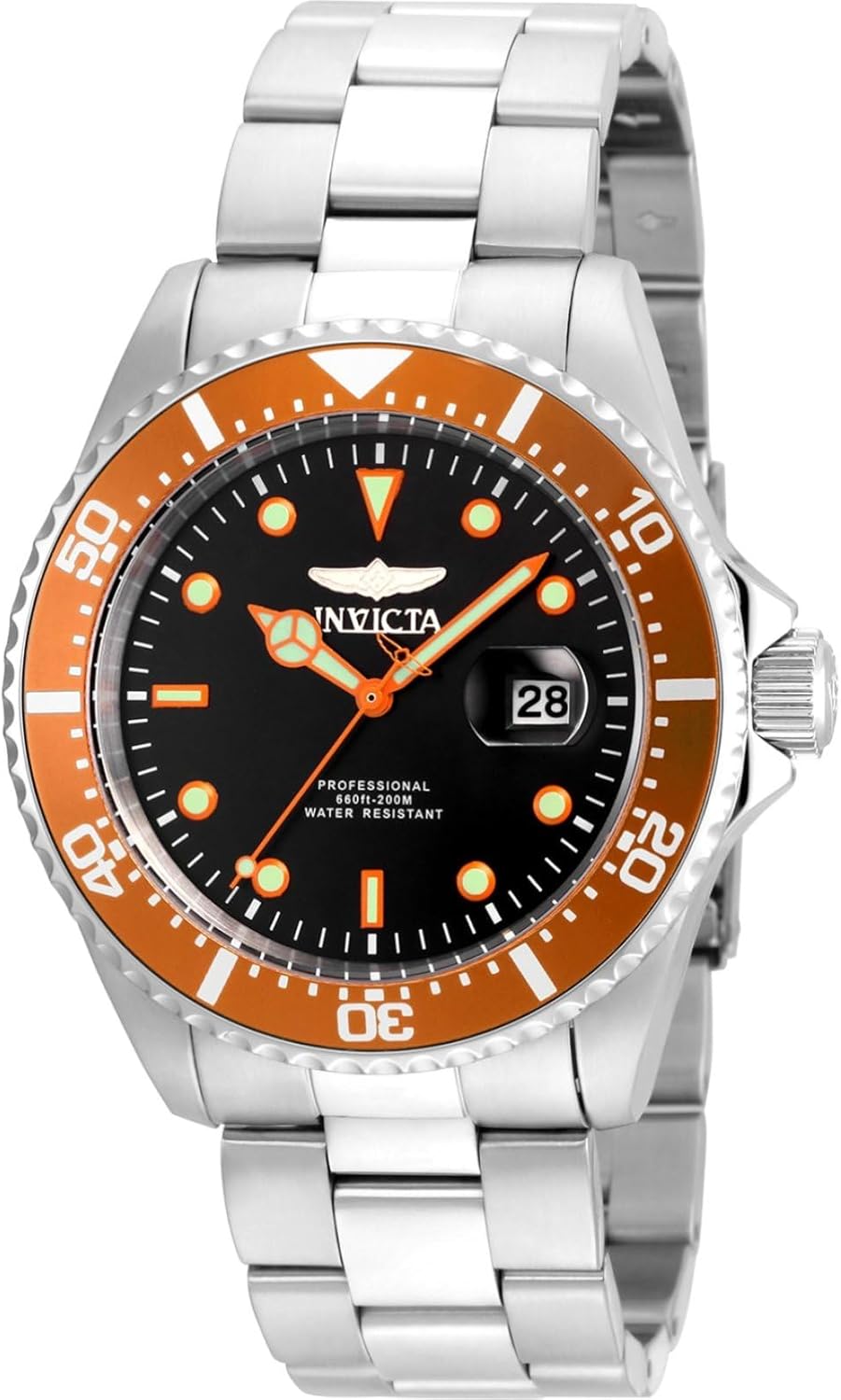 | Invicta Men's 22019 Pro Diver Quartz Watch | Marketed as Pro Diver but check ISO certification separately if actual diving is planned — 'diver-style' is not the same rating as ISO 6425. | Check price |
| Also great |  | Invicta Men's Pro Diver Chronograph Watch | Chronograph complication added to diver styling — relevant if timing (e.g. surface intervals, cooking, exercise) matters as much as water resistance. | Check price |
📑 Table of contents
Watch water-resistance ratings are one of the most misleading specs in consumer electronics — the numbers don’t mean what they intuitively look like they mean, and the difference between “water resistant” and “dive-certified” is much bigger than marketing usually admits.
Why “100M water resistant” doesn’t mean “safe to 100 meters”
Water resistance ratings are tested in STATIC conditions — a watch held motionless at simulated pressure equivalent to that depth. Real swimming/diving involves dynamic pressure (arm movement, wave impact, temperature swings) that stresses the seals far beyond the static rating. Industry convention treats the numbers roughly as:
- 30M / 50M: splash-resistant, rain — NOT swimming
- 100M: swimming/snorkeling on the surface — NOT diving
- 200M: recreational scuba diving
- 300M+: technical/deep diving
If a watch just says “200M water resistant” without an ISO 6425 certification listed, treat it as suitable for swimming/snorkeling but not diving.
ISO 6425 — the actual “dive watch” standard
ISO 6425 is the international standard that separates a real dive watch from a “diver-style” watch. Certification requires the watch to pass tests for: shock resistance, magnetic resistance, thermal shock (going from hot to cold water), overpressure at claimed depth, and — importantly — a UNIDIRECTIONAL rotating bezel with luminous markers. The CITIZEN Promaster pick above explicitly lists ISO certification; the Invicta “Pro Diver” models use dive-watch styling but you’d need to check ISO certification separately on the product page rather than assuming from the name.
What the rotating bezel is actually for (and why unidirectional matters)
The bezel on a dive watch marks elapsed time from your dive start — align the zero marker to the minute hand when you enter the water, and the elapsed time reads directly off the bezel. It only rotates ONE direction (counterclockwise) by design, so if it gets accidentally knocked, it can only ever indicate LESS remaining bottom time, not more — a fail-safe against under-estimating your dive time. If a “dive watch” has a bidirectional bezel, it’s a styling choice, not a functional dive tool.
Should you buy a dive watch if you don’t actually dive?
Yes, honestly — dive watches are popular EDC picks precisely because their over-engineering for actual diving makes them near-indestructible for daily wear. The trade-offs are usually just size (dive watches tend to run bigger to accommodate thick seals and legible markers) and weight (steel construction adds heft). Neither is a functional problem for daily wear; both are personal preference.
Comparison
| Model | Certification | Movement | Best for |
|---|---|---|---|
| Citizen Promaster Dive | ISO 6425 | Eco-Drive (solar) | Actual dive-capable, ISO standard |
| Invicta 22019 Pro Diver | Diver-style | Quartz | EDC use, budget dive-look |
| Invicta Pro Diver Chrono | Diver-style | Chronograph | EDC + timing function |
Related guides
- Automatic vs quartz for everyday carry