How to Size a Watch Band: Get the Perfect Fit at Home (2026)
As an Amazon Associate I earn from qualifying purchases. Prices and availability are accurate as of the date/time indicated and are subject to change.
How this guide was put together (Editorial Standards)
This guide compares options using published manufacturer specifications, patterns in publicly visible owner reviews, and reputable expert sources. We do not operate a physical testing lab; see our how-we-research page for details.
EDITOR'S PICKS
Top Picks

📑 Table of contents
A great watch on a badly sized band feels cheap — it spins around your wrist, slides over your hand, or pinches. Almost every “this watch is uncomfortable” complaint is really a sizing problem, and most of the time you can fix it at home in ten minutes. Here’s how to size a metal bracelet or a strap correctly, what fit to aim for, and the mistakes that lead to a floppy or too-tight watch.
What “correct fit” actually feels like
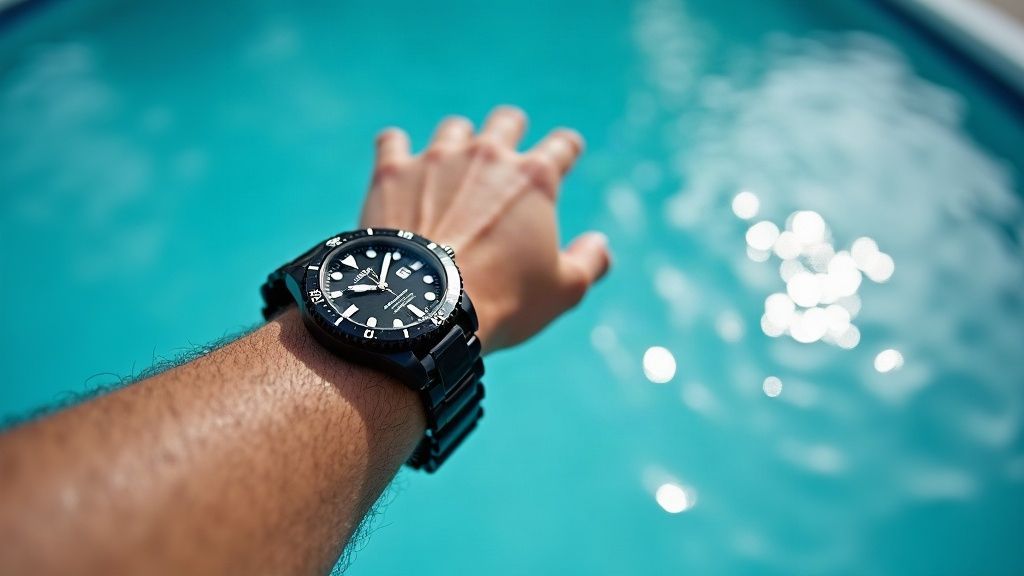
Aim for a fit where the watch:
- Stays put on top of your wrist without spinning around.
- Slides up ~an inch toward your forearm but won’t pass over your hand.
- Lets you fit one finger snugly between band and wrist.
- Doesn’t leave deep marks or restrict — remember wrists swell in heat and later in the day, so size for a little room, not your tightest morning measurement.
Sizing a metal bracelet (removing links)
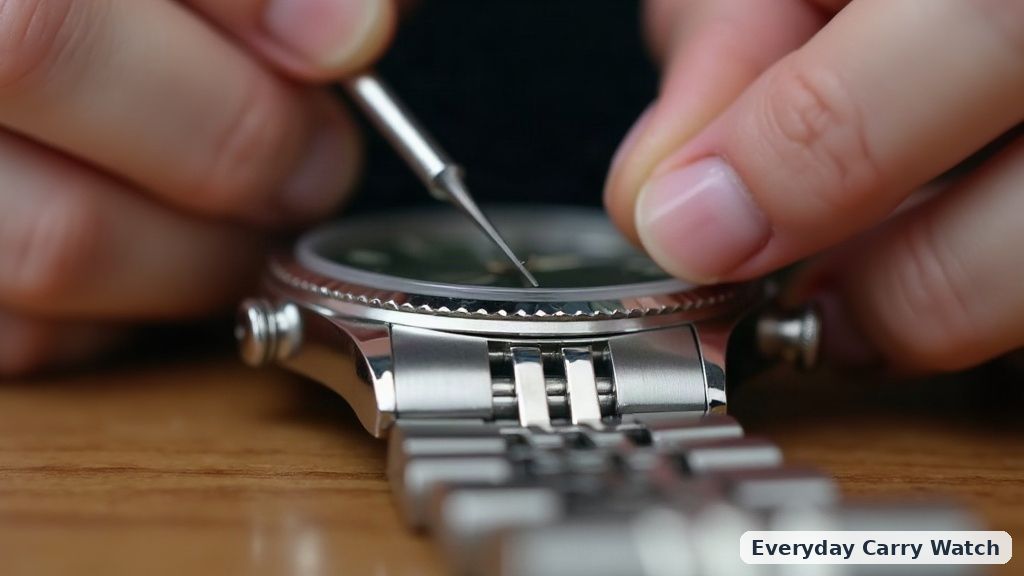
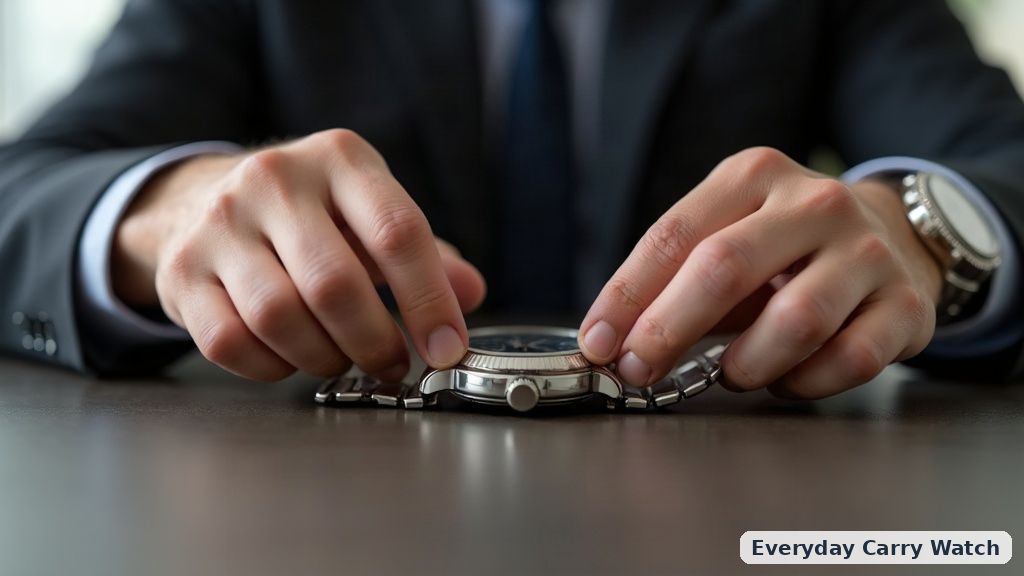
Metal bracelets are sized by removing links:
- Find the arrows on the bracelet’s inner side — they show push-out direction.
- Use a link-removal tool (or a small pin punch) to push out the pins holding the links.
- Remove links evenly from both sides of the clasp so the clasp stays centered on your wrist.
- Use the clasp’s micro-adjustment holes for the final fine-tune.
Remove one link at a time and test — you can’t easily put material back. If unsure, a jeweler does it cheaply, but it’s very doable at home with a $10 tool.
Sizing a strap (leather/NATO/rubber)
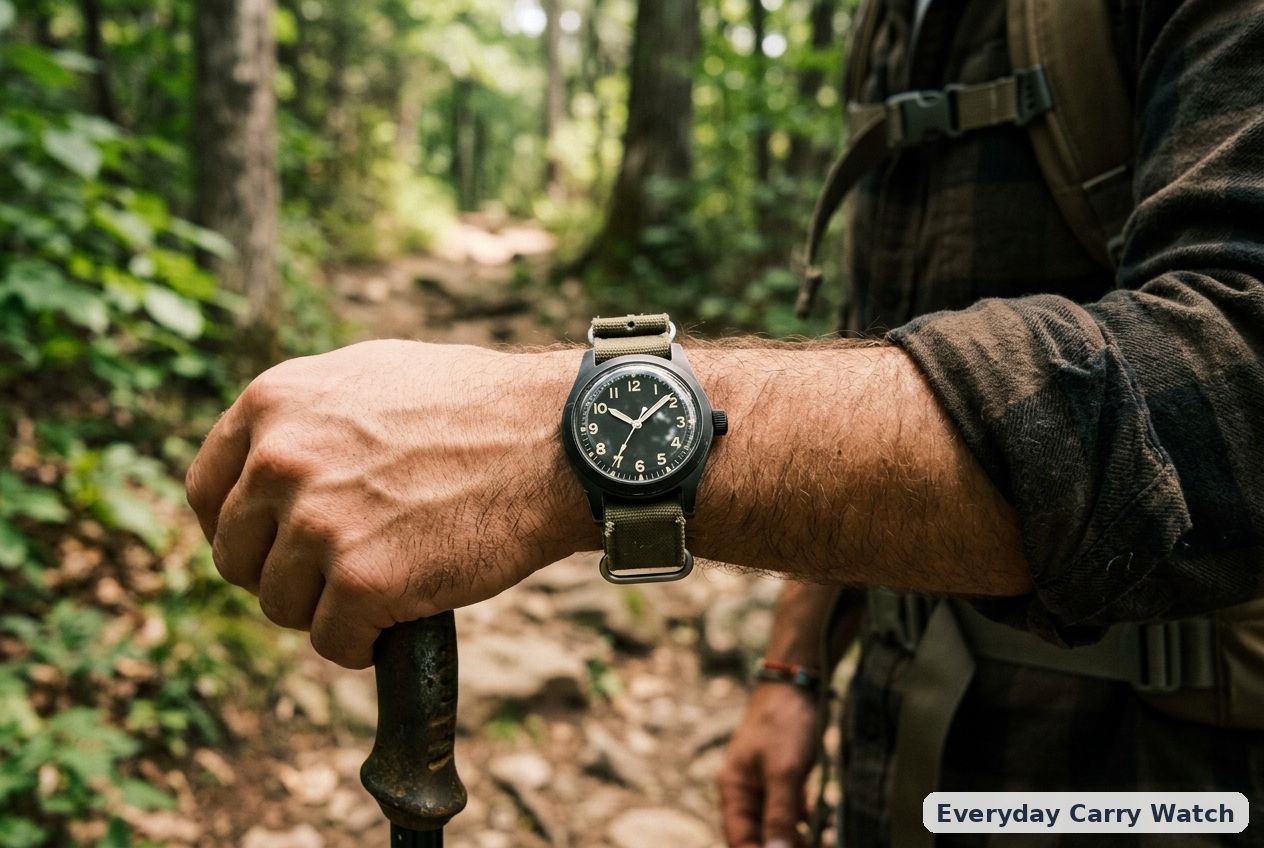
Straps size by buckle hole — just buy the right lug width (the strap must match your watch’s lug width, e.g. 20mm/22mm) and pick the hole that gives the one-finger fit. NATO straps are the most forgiving. If between holes, a leather punch adds one.
How should a watch fit?
Snug on top of the wrist, no spinning, slides up an inch but not over your hand, one finger fits underneath. Size for slight swelling (heat/afternoon), not your tightest measurement. Too tight pinches and marks; too loose spins and reads as ill-fitting. This matters as much as the case size for how a watch wears.
Can I resize a watch band myself?
Yes — metal bracelets need a cheap link-removal tool and ten minutes; straps just need the right buckle hole (and matching lug width). It’s beginner-friendly if you go slow and remove links evenly from both sides. A jeweler will do it for a few dollars if you’d rather not.
What’s lug width and why does it matter?
Lug width is the gap between the lugs where the strap attaches (commonly 18–22mm). A strap MUST match it or it won’t fit. Check your watch’s spec before buying a replacement strap. Getting lug width right is the #1 strap-buying mistake to avoid.
How do I know how many links to remove?
Wrap the bracelet on, note the overlap, and remove links (evenly both sides) until you reach the one-finger fit, using micro-adjust for the last bit. Remove one at a time and re-check — it’s easy to take too much. Keep the removed links in case you need them later.
📚 Related In-Depth Analysis
- Compare findings with our guide on Watch Lug Width Strap Size Guide.
- Compare findings with our guide on Automatic Vs Quartz Everyday Watch.
📚 Related In-Depth Analysis
- Compare findings with our guide on Best Solar Watches Under 200.
- Compare findings with our guide on Field Watch Vs Dive Watch.
🔧 Interactive Planning Tool
Need exact measurements for your setup? Use our EDC Lug-to-Lug Wrist Sizing Engine to Calculate maximum lug-to-lug span and ideal case diameter for zero overhang.
Get the fit right
Size for a snug-but-not-tight fit that won’t spin or slide over your hand, allowing for wrist swelling. Metal = remove links evenly with a cheap tool + micro-adjust; strap = right lug width + buckle hole. Ten minutes at home turns a watch that annoys you into one you forget you’re wearing. Keep it comfortable long-term with our watch care guide.