Sapphire vs Mineral vs Acrylic Watch Crystals: Which Survives Daily Wear? (2026)
As an Amazon Associate I earn from qualifying purchases. Prices and availability are accurate as of the date/time indicated and are subject to change.
How this guide was put together (Editorial Standards)
This guide compares options using published manufacturer specifications, patterns in publicly visible owner reviews, and reputable expert sources. We do not operate a physical testing lab; see our how-we-research page for details.
EDITOR'S PICKS
Top Picks


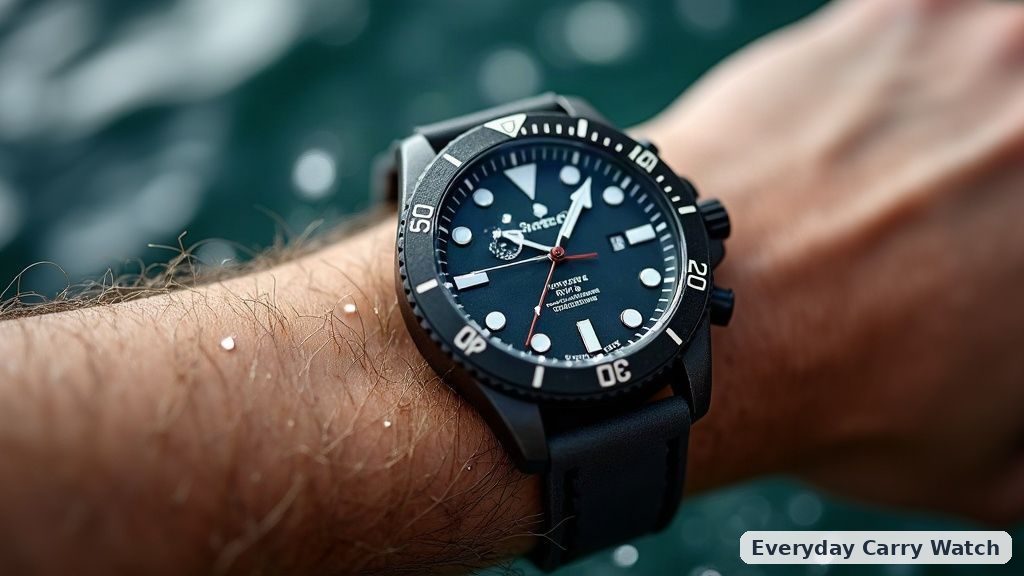
Of all the ways a watch gets damaged, the crystal — the transparent cover over the dial — takes the most hits: desk edges, door frames, gym equipment, the inside of your car door. Which material sits over your dial decides whether your watch looks pristine in five years or picks up a web of hairline scratches in five weeks. There are three common materials, and they behave very differently.
The three crystal materials
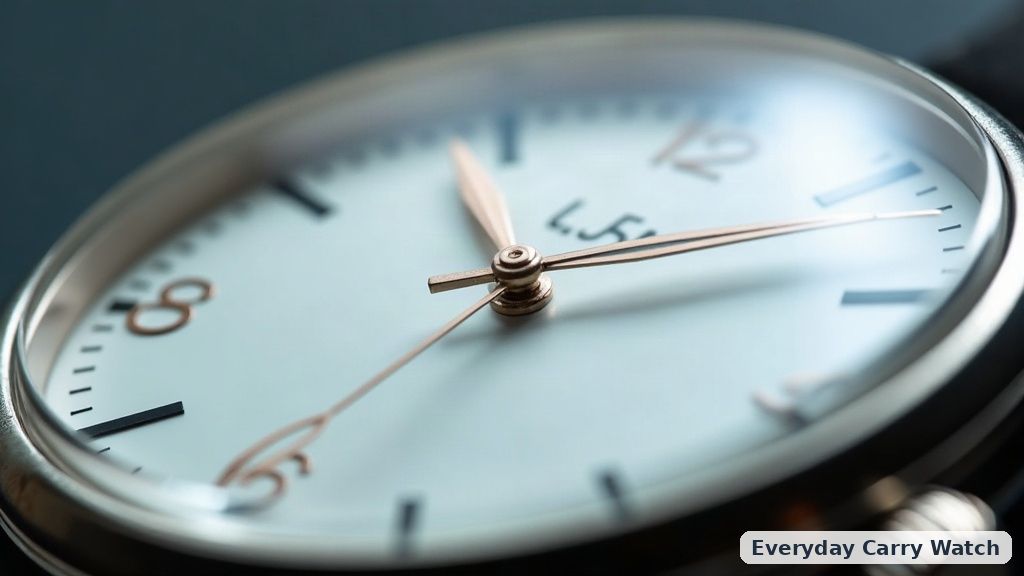
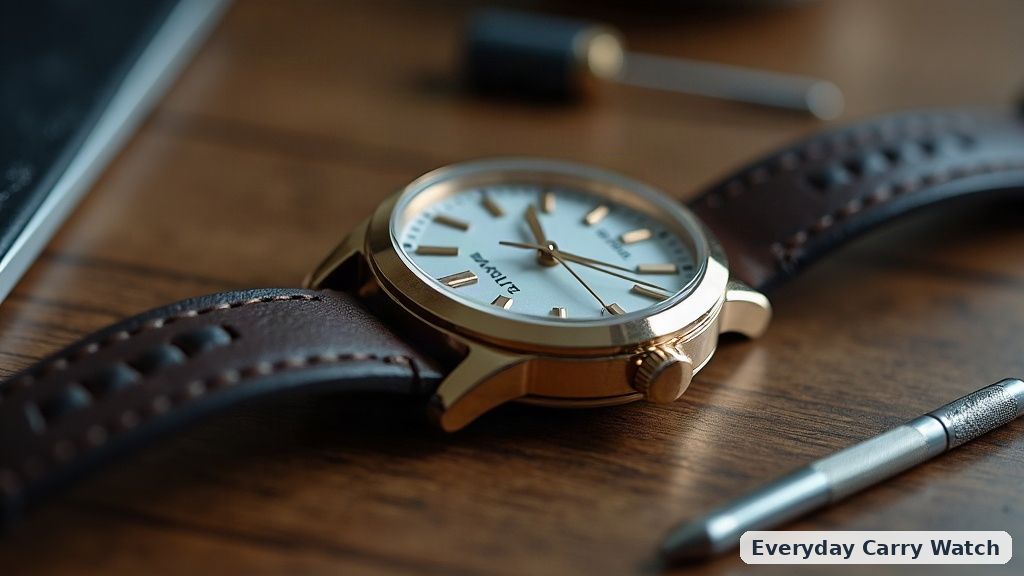
Acrylic (plexiglass/hesalite). A clear plastic. Cheap, light, and nearly shatterproof — it flexes rather than cracks, which is why it flew on early space missions. Its weakness is softness: it scratches easily. The upside is that light scratches polish out with a plastic polish and a cloth, something you cannot do with glass.
Mineral glass. Hardened glass, often the mid-tier default. Much harder to scratch than acrylic, and cheaper than sapphire. It sits in the middle on every axis: decent scratch resistance, decent shatter resistance, easy to produce. Deep scratches can’t be polished out.
Sapphire. Synthetic sapphire crystal — the same material grown in a lab, not a gemstone. It’s the hardest of the three by a wide margin and is what quality watches use. Nearly scratch-proof against everyday materials; the main risk is a hard impact on a corner, which can chip or crack it because hardness comes with brittleness.
How they compare on the Mohs hardness scale
Hardness predicts scratch resistance. On the Mohs scale (1 = talc, 10 = diamond):
| Crystal | Mohs hardness | Scratch resistance | Shatter resistance | Relative cost |
|---|---|---|---|---|
| Acrylic | ~3 | Low (but polishable) | Excellent (flexes) | Lowest |
| Mineral | ~5–6 | Medium | Good | Low–mid |
| Sapphire | ~9 | Excellent | Good, but can chip on impact | Highest |
For reference, hardened steel and most sand/grit sit around 5.5–7 on the scale — which is exactly why mineral crystals pick up scratches (everyday grit can match or exceed them) and sapphire mostly doesn’t (almost nothing you meet daily reaches 9).
Which crystal survives daily wear best?

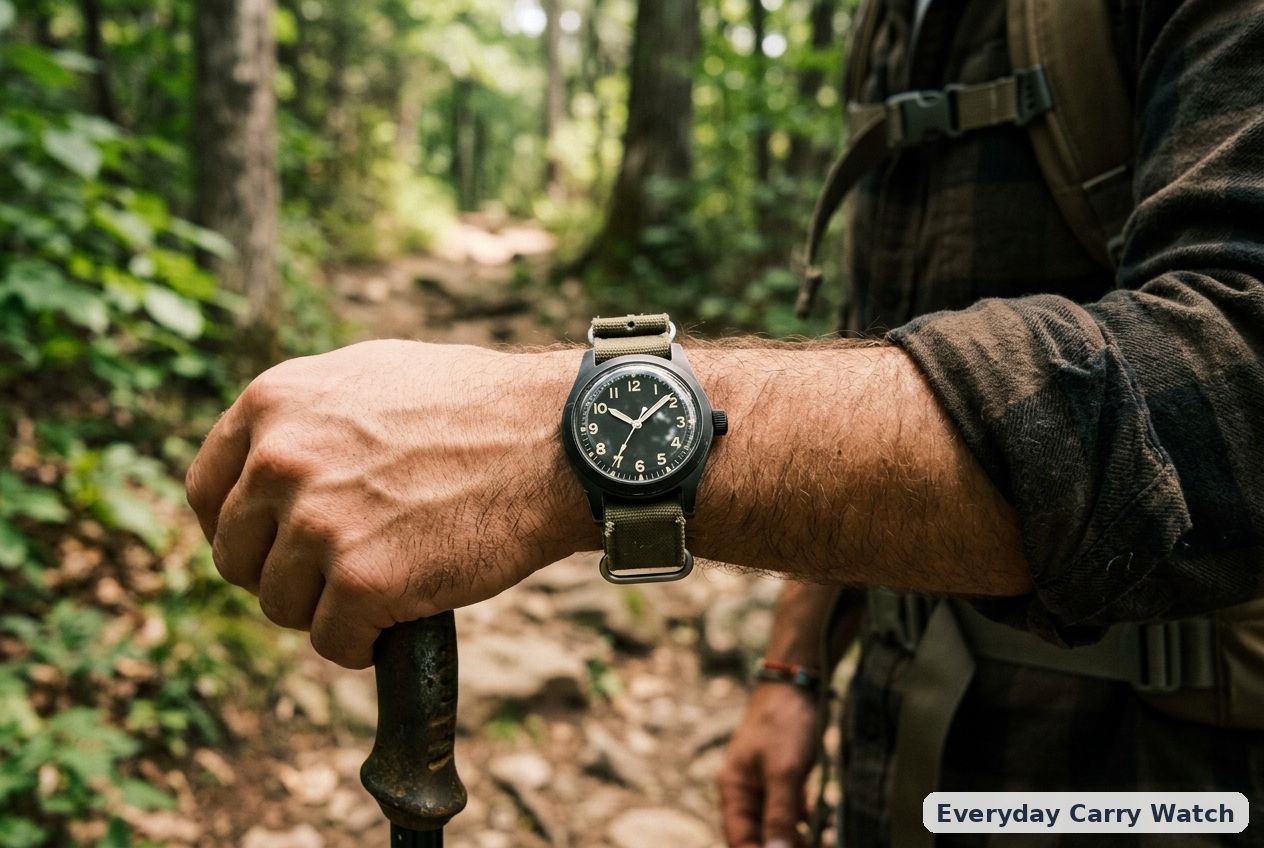
For pure scratch resistance in normal life, sapphire wins clearly — it shrugs off the keys-and-desk contact that dulls a mineral crystal. If your watch is a daily beater that meets grit and hard edges, sapphire keeps it looking new longest. This is a big reason it’s standard on good affordable dive watches, which are built to be worn hard.
But “best material” isn’t the same as “best for you”:
- Rough manual work / high impact risk: acrylic’s flex means it survives a sharp knock that could chip sapphire — and scratches buff out.
- Set-and-forget daily wear: sapphire, every time.
- Budget builds: mineral is a sensible middle ground, and a scratched mineral crystal is cheap to replace.
Does an anti-reflective coating matter?
Many sapphire crystals add an anti-reflective (AR) coating so you can read the dial in sunlight. It genuinely helps legibility, but a coating on top of the sapphire can itself scuff over years. Inside-only AR coating lasts longer than double-sided. It’s a legibility feature, not a durability one — worth having, not worth overpaying for.
How this fits the rest of your watch decision
Crystal is one durability factor among several. Water resistance protects the movement (see our water resistance guide), and the movement type affects long-term care (our movements explainer). For everyday carry, prioritize a watch whose crystal, case, and water rating all match how you actually live — a theme we return to in choosing between a field and dive watch.
📚 Related In-Depth Analysis
- Compare findings with our guide on How To Take Care Of A Watch.
- Compare findings with our guide on How To Change A Watch Battery.
📚 Related In-Depth Analysis
- Compare findings with our guide on Field Watch Vs Dive Watch.
- Compare findings with our guide on Dive Watch Water Resistance Explained.
🔧 Interactive Planning Tool
Need exact measurements for your setup? Use our EDC Lug-to-Lug Wrist Sizing Engine to Calculate maximum lug-to-lug span and ideal case diameter for zero overhang.
The bottom line
If you want a watch that stays scratch-free through daily abuse, buy sapphire and don’t overthink it — it’s the single best durability upgrade for an everyday watch. Choose acrylic only when impact resistance and cheap self-repair beat scratch resistance, and treat mineral as the fine-but-unremarkable middle. Whatever the material, a few habits extend its life; our watch care guide covers them.