How to Take Care of a Watch (2026): Simple Habits That Add Years
As an Amazon Associate I earn from qualifying purchases. Prices and availability are accurate as of the date/time indicated and are subject to change.
How we picked: This guide compares options using published
specifications, verified owner-review patterns and reputable expert testing.
We label clearly what is hands-on vs research-based, and never present others'
testing as our own.
Our top picks
| Rank | Product | Name | Why we picked it | Buy |
|---|---|---|---|---|
| Top pick |  | Citizen Promaster Eco-Drive (low-maintenance: solar + high water resistance) | Check price |
A watch is one of the few things you own that can genuinely outlive you — but only if you treat it right. The difference between a watch that looks sharp in twenty years and one that’s scratched, foggy, and dead is a handful of simple habits and avoiding a few common mistakes. None of it is hard or expensive. Here’s how to make any watch last.
Everyday habits that protect a watch
- Wipe it down. After wearing, a quick wipe with a soft cloth removes sweat and oils that corrode cases and bracelets over time. Weekly is plenty for most.
- Know your water resistance — and respect it. This is the big one people get wrong (below).
- Take it off for rough work. Impacts and abrasive dust do more damage than daily wear. Off for gym, gardening, or DIY.
- Keep it away from magnets and chemicals. Strong magnets can throw off mechanical accuracy; solvents and perfumes degrade seals and straps.
The water-resistance rule most people get wrong
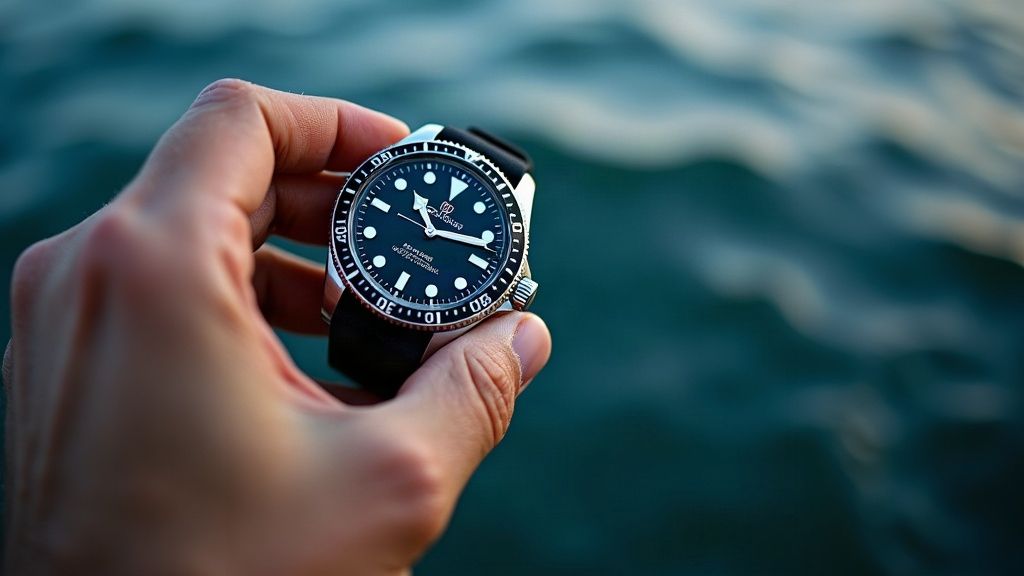
“Water resistant” is not one thing — the rating tells you what’s actually safe:
- 30m / 3ATM: splash-resistant only. Not for swimming.
- 50m / 5ATM: okay for brief swimming, not diving.
- 100m / 10ATM: real swimming and snorkeling.
- 200m+ / 20ATM: proper dive-watch territory — like the Citizen Promaster — safe for swimming and diving.
Two rules regardless of rating: never operate the crown or buttons underwater, and have the seals checked periodically (they age). Our dive-watch water-resistance guide breaks the ratings down fully.
How do I clean a watch?
Wipe the case and bracelet with a soft, slightly damp cloth; for a metal bracelet on a water-resistant watch, mild soapy water and a soft brush lift grime, then dry thoroughly. Never submerge a watch that isn’t rated for it, and keep moisture away from the crown. Leather straps get wiped dry, never soaked — water ruins leather.
How often should a watch be serviced?
Mechanical/automatic watches benefit from a service every few years (lubrication and seal checks); quartz and solar watches need far less, mainly seal checks if you swim with them and, for quartz, battery changes. A low-maintenance solar watch like an Eco-Drive removes the battery chore entirely — see watch movements explained.
How should I store a watch I’m not wearing?
Somewhere dry, cool, and away from magnets and direct sun, ideally in a box or pouch to avoid scratches. Automatics that you rotate can go on a watch winder to stay running, or just wind them before wearing. Avoid bathrooms (humidity) and windowsills (heat and UV fade dials and straps).
The wrap-up
Wipe it, respect its water-resistance rating, take it off for rough tasks, keep it from magnets and chemicals, and store it dry. Those five habits — plus the occasional seal check — are the whole game. A watch rarely dies of old age; it dies of a swim it wasn’t rated for or years of neglect. Check your watch’s exact water-resistance rating on the listing before you trust it near water.